September is National Preparedness Month, making it a good time to think about one kind of preparation families often put off: planning for the future care needs of an aging parent or loved one.
No one wants to feel rushed into an important decision. Yet many families do not begin exploring senior living until after a fall, hospitalization, sudden decline, medication concern, or caregiver burnout.
Planning ahead does not mean a move is happening tomorrow.
It simply means your family understands the options before a crisis forces you to make a decision quickly.
Why Families Put Off the Conversation

Talking about aging can feel uncomfortable.
Parents may worry about losing independence. Adult children may be afraid of upsetting Mom or Dad. Siblings may have different opinions about what should happen next.
So everyone waits.
Sometimes that works for a while. But when something suddenly changes, families can find themselves trying to make major decisions under stress.
That is why having the conversation early can be such a gift.
Planning Ahead Creates More Choices
When families begin researching before there is an urgent need, they have time to ask questions, tour communities, compare options, and think about what matters most.
Instead of asking, “Where can Mom move this week?” you can ask:
What type of support would help Mom remain as independent as possible?
What kind of environment would feel comfortable and familiar?
Is social interaction becoming more important?
Would help with meals, medications, bathing, dressing, or transportation make life easier?
What is most important to Mom or Dad in their next home?
What can our family realistically manage long term?
Those are much easier questions to answer when everyone has time to think.
Know the Signs That More Support May Be Needed
Every family is different, but certain changes may signal that it is time to begin exploring additional support.
You may notice:
Frequent falls or balance concerns
Difficulty managing medications
Changes in eating habits or weight
Increasing forgetfulness
Trouble keeping up with household responsibilities
Isolation or loneliness
Changes in personal hygiene
Caregiver exhaustion
Repeated hospital or emergency room visits
A loved one simply no longer feeling safe at home alone
One concern does not automatically mean assisted living is necessary. But a pattern of changes may be a good reason to start the conversation.
Have the Conversation Before You Need the Answer
Planning should begin with the older adult whenever possible.
Ask open-ended questions such as:
“What would make life easier for you right now?”
“What worries you most about living at home?”
“If you ever needed more help, what would be important to you?”
“What would you want us to know before making decisions about your care?”
The goal is not to convince someone to move. It is to understand their wishes.
Those conversations can make future decisions far less stressful.
Learn About Your Options
Senior care is not one-size-fits-all.
Depending on a person’s needs, options may include:
Help from family or friends
In-home care
Adult day programs
Independent living
Assisted living
Skilled nursing or rehabilitation
Understanding the differences before you need them gives your family a much clearer path forward.
Tour Before There Is an Emergency
Many families are surprised by how helpful it can be to tour a senior living community before a move is necessary.
A tour gives you the opportunity to:
See the environment firsthand
Meet caregivers and team members
Ask about daily routines
Learn about meals and activities
Understand care options
Ask about costs
Talk about what happens if care needs change
You may never need to make a move. But if the day comes, you will already know where you feel comfortable.
Gather Important Information
Preparation also means knowing where important documents and information are located.
Families should know:
Who has medical power of attorney
Who has financial power of attorney
Where insurance information is kept
Current medications
Physician contact information
Financial resources available for care
Long-term care insurance information, if applicable
Personal wishes regarding future care
Having this information organized can save valuable time during an unexpected health event.
Be Prepared Before You Need It
A little preparation now can make an unexpected situation much easier to navigate. Download our free checklist to help your family organize important information, documents and next steps before they’re needed.
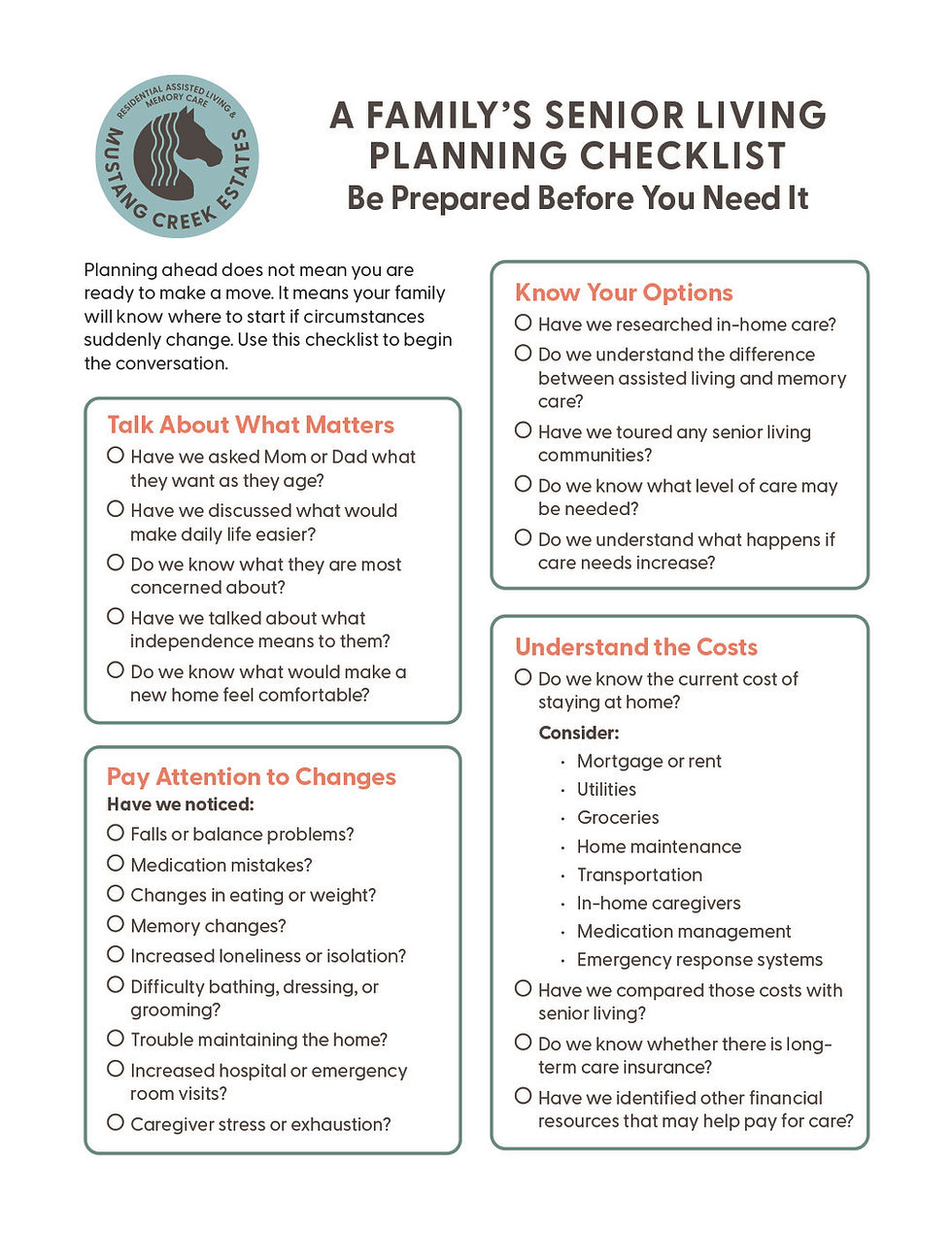
Planning Ahead Is an Act of Care
Preparing for the future is not about expecting something bad to happen.
It is about reducing uncertainty.
When families plan ahead, they often feel more confident, more informed, and better able to honor their loved one’s wishes.
At Mustang Creek Estates, we regularly talk with families who are simply gathering information. You do not have to be ready to make a decision to start asking questions.
Sometimes the best first step is simply learning what your options are.
You Don’t Have to Decide Today
If you are beginning to wonder what the future might look like for an aging parent or loved one, start the conversation now.
Ask questions.
Learn about your options.
Make a plan.
Because when families prepare before a crisis, they have something incredibly valuable when the unexpected happens:
Peace of mind.
September 1, 2026